
Upcoming
Maryādā Puruṣottama
The inner world of the Rāmāyaṇa and the ideals of Śrī Rāmacandra
A sudden decree of exile sends Prince Rāma, Sītā and Lakṣmaṇa on a journey of separation and sacrifice, where every ideal is tested and dharma is restored through steadfast love.
Maryādā Puruṣottama explores the life and character of Śrī Rāmacandra through a psychological and deeply human lens. Rather than simply retelling the events of the Rāmāyaṇa, the film seeks to enter the inner world of its characters: their dilemmas, emotions, relationships, responsibilities and choices.
Beyond retelling
The intention is to make the audience experience the Rāmāyaṇa not merely as a sequence of events, but as an exploration of human psychology and values. The film also asks a contemporary question: why does the figure of Śrī Rāma continue to remain an ideal for society across generations? The answer is explored through the character’s choices, relationships and ideals rather than through exposition alone.
At the centre of the film
The sixteen qualities
At the opening of the Rāmāyaṇa, the sage Vālmīki asks Nārada whether there is anyone in the world who possesses these sixteen qualities. They become the film’s way of examining character: what makes an ideal person, how ideals are tested, and what happens when duty, affection, power and personal emotion meet.
- Guṇavānvirtuous
- Vīryavānvaliant
- Dharmajñaknower of dharma
- Kṛtajñagrateful
- Satya-vākyatruthful in speech
- Dṛḍha-vratafirm in his vows
- Cāritreṇa yuktaof noble conduct
- Sarva-bhūteṣu hitadevoted to the welfare of all beings
- Vidvānlearned
- Samarthacapable
- Sadaika-priya-darśanaever pleasing to behold
- Ātmavānself-possessed
- Jita-krodhamaster of anger
- Dyutimānradiant
- Anasūyakafree from envy
- Bibhyati devāś caone whom even the gods hold in awe
Key episodes
Where the ideals are tested
01
A decree and an acceptance
On the eve of his coronation, Rāma hears the king’s decree of exile, and answers not with anger but with tranquil acceptance. Sītā and Lakṣmaṇa refuse to leave his side.
02
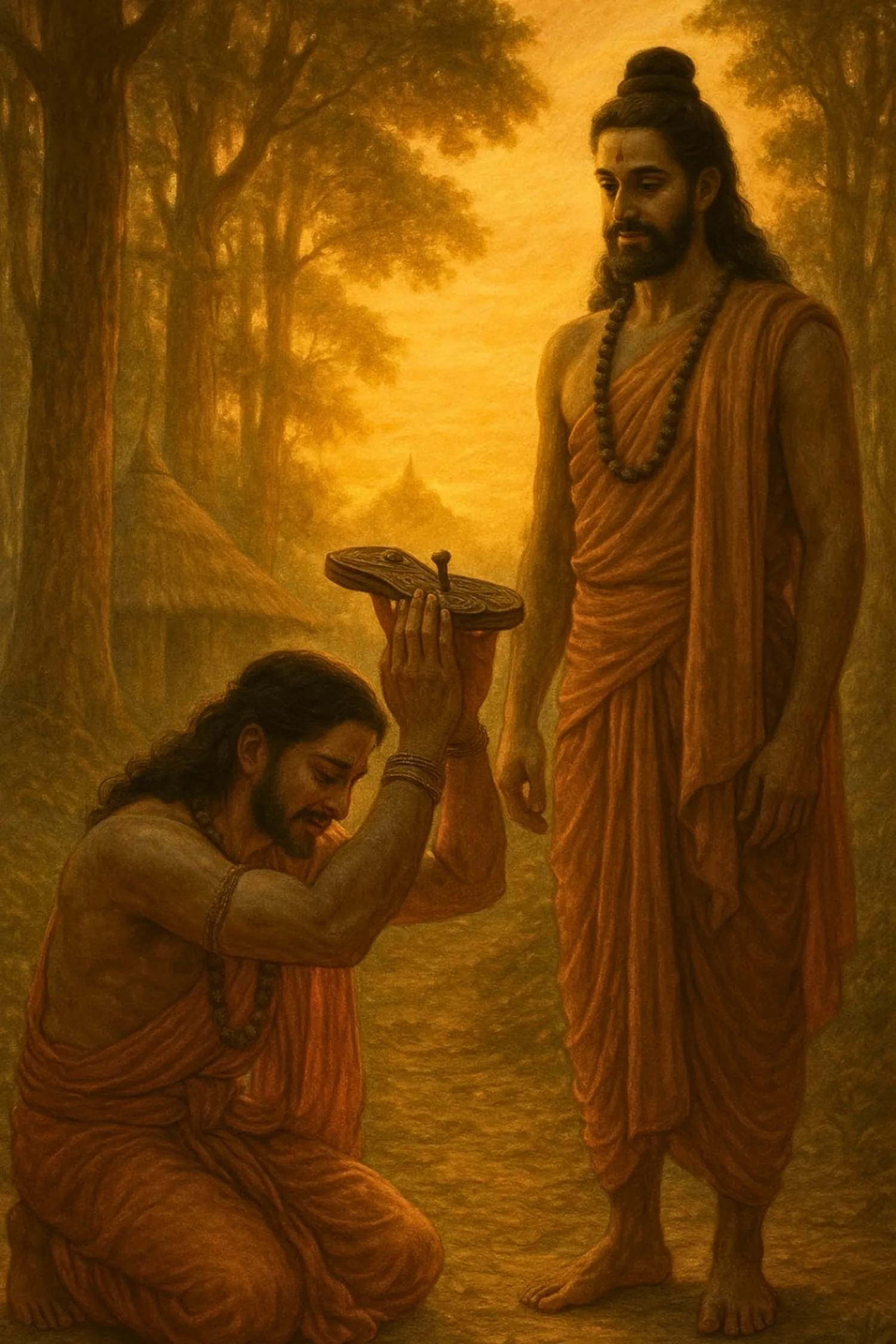
The sandals on the throne
Bharata travels to the forest to bring his brother home. Refused with love, he returns with Rāma’s sandals and rules Ayodhyā in his name, as an ascetic.
03
The serenity of the forest
A simple hermitage, the company of sages, and a joy that no longer depends on a palace.
04
Śabarī’s waiting
An elderly woman of the forest who has waited years for Rāma offers him berries she has tasted for sweetness, and he accepts them with love.
05
Hanumān and the dawn of hope
A meeting that becomes a bond of selfless service, and the search for Sītā begins.
06
A final call to conscience
Before the war, Rāma sends one last messenger to Rāvaṇa’s court, offering peace. Restraint meets pride.
A timeless ideal
Seen through a human journey
The relevance of the Rāmāyaṇa does not depend upon the passage of time. Its enduring strength lies in the questions of character, responsibility, truth, leadership, sacrifice and relationships that remain recognisable to everyone.
Written by Gaura Śakti Dāsa, drawing on Vālmīki’s Rāmāyaṇa.